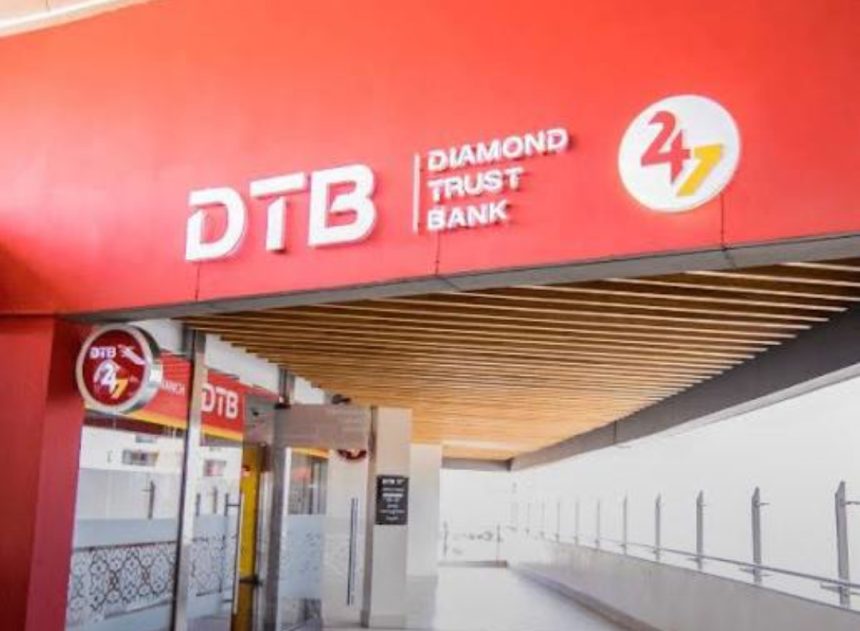
The High Court Commercial Division has ordered Diamond Trust Bank (DTB) to refund Shs2.15 billion to Global Wire Industries after finding that the bank negligently processed 62 unauthorised withdrawals from the company’s account using forged signatures and documents.
In a judgment delivered on November 13, 2026, Justice Stephen Mubiru held that DTB breached the account’s operating mandate by allowing transactions that required the approval of two company directors to proceed without proper authorisation.
The court also held company director Rajiv Kumar Sabharwal personally liable for the money, finding that he had used forged signatures and company resolutions to gain control of the company’s finances.
Justice Mubiru further awarded Global Wire Industries Shs25 million in general damages against the bank.
The disputed funds were withdrawn in 62 transactions between 2017 and 2019.
The case arose from a business partnership between Rajendra Kumar Jayantilal Thakkar and Sabharwal, who incorporated Global Wire Industries in April 2017 to manufacture binding wire for Uganda’s construction industry.
The two businessmen each owned 50 per cent of the company, with Thakkar responsible for supplying machinery and raw materials from India, while Sabharwal managed local operations.
Both directors were authorised signatories to the company’s DTB account, meaning withdrawals required their joint approval.
However, court records showed that Sabharwal allegedly used forged company documents to change the banking arrangements and obtain sole control over the account.
One of the disputed documents was a resolution dated March 2, 2019, which purported to grant Sabharwal sole signing authority over the DTB account.
Justice Mubiru found that the bank accepted the resolution despite the existing requirement for both directors to authorise transactions.
The financial irregularities came to light in 2019 when Thakkar returned to Uganda and began examining the company’s financial records.
He subsequently engaged an accountant, Denis Legamoi, to review bank statements covering October 2017 to April 4, 2019.
A report prepared on April 26 identified withdrawals amounting to Shs2.15 billion, which were attributed to Sabharwal.
Thakkar reported the matter to police and formally notified DTB on April 9, 2019, raising concerns that cheques drawn on the company’s account bore signatures he had not authorised.
He also alerted the Uganda Registration Services Bureau (URSB) six days later, asking the agency to stop registering additional company documents presented by Sabharwal over concerns about forged resolutions.
However, court records showed that URSB subsequently registered additional documents, including a resolution dated April 20, 2019, which was used to remove Thakkar as a company director.
Justice Mubiru found that URSB should have undertaken further verification after receiving the complaint and held that its actions contributed to Thakkar’s exclusion from the company’s management.
The judge consequently ordered the cancellation of the disputed company resolutions and directed URSB to reinstate Thakkar as a director of Global Wire Industries.
Criminal conviction
The dispute also resulted in criminal proceedings against Sabharwal, who was charged with embezzlement, forgery and uttering false documents before the Anti-Corruption Division of the High Court in January 2020.
He initially denied the charges but later changed his plea to guilty after three prosecution witnesses had testified.
On November 25, 2021, the court sentenced him to four years in prison and ordered him to pay Thakkar Shs556 million in compensation.
Sabharwal challenged the conviction and sentence before the Court of Appeal, which dismissed his appeal in October 2022. He subsequently appealed to the Supreme Court.
In August 2023, Supreme Court Justice Faith Mwondha granted him bail pending determination of his appeal, subject to a Shs10 million cash payment and reporting to the court registrar every 14 days.
Bank’s defence rejected
During the commercial proceedings, DTB denied liability, arguing that it had acted within its banking mandate and that Thakkar had approved the disputed payments when contacted.
Sabharwal also maintained that Thakkar had signed company documents in advance to enable him to manage the business during his absence.
However, Justice Mubiru relied on handwriting evidence, Thakkar’s denial of the signatures and Sabharwal’s guilty plea in the criminal proceedings to establish that the transactions were unauthorised.
The judge rejected the bank’s attempt to transfer responsibility to its customer, ruling that DTB had failed to demonstrate that the company had substantially contributed to the forgery or that the bank had exercised the necessary care when processing the withdrawals.
Beyond the Shs2.15 billion refund and Shs25 million general damages against DTB, the court awarded Thakkar Shs150 million against Sabharwal and Shs10 million against URSB.
The court further ordered that the Shs2.15 billion refund attracts annual interest of 10 per cent, while the general damages awards attract 15 per cent interest, running from November 13 until payment in full.
The judgment places responsibility on the bank for processing transactions that violated the company’s agreed account-signing arrangements.