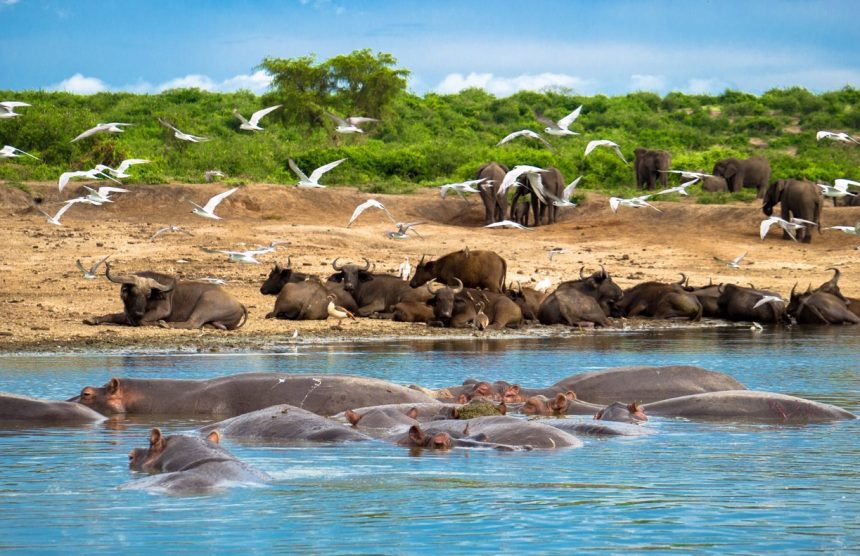
Finance Minister Henry Musasizi has called for deliberate investment, stronger public-private partnerships and improved tourism products to unlock Uganda’s tourism potential, as the country targets US$5 billion in annual tourism receipts by 2030.
Uganda is stepping up efforts to transform its tourism sector into a stronger driver of economic growth, employment and foreign exchange earnings, with Government placing greater emphasis on attracting high-value visitors, extending tourist stays and developing new tourism experiences.
Finance Minister Hon. Henry Musasizi said achieving the ambitious target would require a coordinated approach that goes beyond increasing international arrivals to ensure visitors spend more time in the country and contribute more to the economy.
He made the remarks while officiating the 4th Annual Tourism Development Programme Review Conference at Imperial Royale Hotel, where he reaffirmed tourism’s position as a high-priority sector in Uganda’s development agenda.
The latest Tourism Development Programme Annual Performance Report for FY2025/26 shows that Uganda received 1.64 million international tourists in 2025, representing a 19.7% increase from 1.37 million in 2024. Tourism receipts rose by 21.3% to Shs5.83 trillion, equivalent to US$1.62 billion, reflecting increased visitor spending and longer stays.
The performance signals growing opportunities for the country to capture more value from tourism by strengthening the quality of its products, expanding accommodation and conference facilities, and developing experiences that encourage visitors to stay longer.
“The Government’s role is to create an enabling environment for the private sector to invest, expand tourism facilities, improve standards and attract foreign direct investment through partnerships and joint ventures,” Musasizi said.
Beyond arrivals: Growing the value of tourism
The latest figures indicate that Uganda is making progress not only in attracting visitors but also in increasing the amount of time and money they spend in the country.
The average length of stay increased from 8.7 nights in 2024 to 8.8 nights in 2025, while average tourist expenditure per trip rose from US$933 to US$986.

Leisure tourists stayed an average of 9.5 nights, while visitors travelling to see friends and relatives stayed an average of 11.3 nights.
The positive trend continued in the first half of 2026, when Uganda recorded 793,815 international visitors between January and June, up 3.7% from 765,307 during the corresponding period in 2025.
Tourism expenditure during the six months reached approximately Shs2.30 trillion, equivalent to US$631 million, representing a 25.6% increase compared with the same period in 2025. Average length of stay also increased from 7.4 to 8.3 nights.
The figures reinforce the importance of strategies that encourage visitors to explore multiple destinations, experience a broader range of tourism products and extend their time in Uganda.
For investors, this presents opportunities across accommodation, transport, destination experiences, hospitality services and other businesses that support the tourism value chain.
Private investment at the centre of sector growth
Musasizi called for stronger public-private partnerships to translate Uganda’s tourism potential into viable and bankable investment opportunities.

He identified hotels and conference facilities, eco-tourism, cultural and heritage tourism, faith-based tourism, agro-tourism, sports, wellness, adventure, creative and entertainment tourism, and emerging digital tourism products as areas where investment could help broaden the sector’s contribution to the economy.
He also emphasised the importance of affordable financing, fiscal incentives and Economic and Commercial Diplomacy in promoting Uganda as an attractive destination for international investors.
The Government, he said, would continue investing in tourism infrastructure, destination marketing, product development, conservation, specialised skills and digital transformation, while working to improve the business and investment environment.
These interventions are intended to address the practical requirements for sustainable sector growth, including access to destinations, quality accommodation, skilled personnel, effective promotion and a more diverse range of visitor experiences.
Achieving the US$5 billion annual receipts target will therefore depend on coordinated action by Government, tourism operators, investors, lo